
Kenya’s Proposed Internet Metering Law Sparks Privacy and Cost Concerns
Kenya’s Proposed Internet Metering Law Sparks Privacy and Cost Concerns
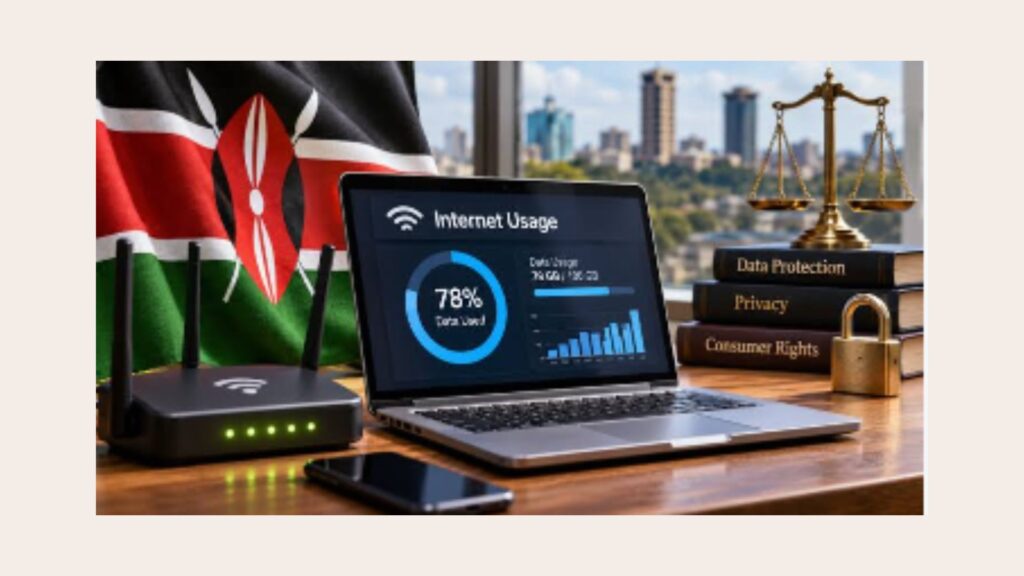
A new legislative proposal in Kenya that would force internet service providers (ISPs) to track user data consumption and assign unique meter numbers is facing strong pushback. The law could be a threat to user privacy, increase internet charges, and reveal personal data, telecommunications companies, regulators and civil rights groups warn.
READ ALSO
President Ruto Signs Six New Bills into Law to Protect Workers, Mothers, and Victims
Senator Cherargei Wants IEBC Proficiency Tests for Election Candidates Over Fake Certificate Fears
Two Men Arrested Following Break-In at Prince William and Kate’s Country Home
IEBC Chairperson Erastus Ethekon Guarantees a Transparent 2027 General Election
Aldai MP Marianne Jebet Kitany introduced the bill dubbed the Kenya Information and Communications (Amendment) Bill, 2025. It is aimed primarily at introducing mandatory consumption billing throughout the country. The proposed rules would include an internet meter number assigned to each internet consumer. Providers would have to track the amount of data used by each individual and convert that data usage into a detailed record and then bill by actual use.
Supporters of the bill say it will prevent consumers from paying unnecessary costs because they won’t pay for more traffic than they consume. But leading industry figures doubt whether it is needed and if there are enough safeguards within the law to ensure that customers’ data is secure.
Industry and Regulatory Pushback
As the National Assembly’s Departmental Committee on Communication, Information and Innovation is deliberating on the draft law, the debate has intensified. The Communications Authority of Kenya (CA), which regulates the telecom sector, has called on the lawmakers to refrain from imposing metered billing on the industry. Meanwhile, Telkom Kenya has sounded a warning that the regulations may affect the cost of Internet services, deter investors in the sector and infringe on user privacy.
The bill, if approved, would make it mandatory for ISPs to create and operate tracking systems that would produce readable billing reports from user activity. Also, companies would be required to report billing system information such as the meter numbers of the customer to the regulator at least annually.
Legal and Data Protection Questions
Human rights and legal organizations are also voicing serious doubts. The International Commission of Jurists (ICJ) Kenya contends that mandatory metering is not needed, as the Communications Authority already has the legal authority to settle billing disputes and safeguard consumers.
Demas Kiprono of ICJ Kenya pointed out that it may be overkill to have identifiable usage records, when the intent of the bill is to safeguard consumers. While critics focus on the privacy risks of making direct connections between identities and internet usage logs, it is undeniable that such a move is problematic. They are urging Parliament to clearly define:
- Who is allowed to access the collected usage data.
- How long internet providers and regulators can store the records.
- Under what specific conditions the data can be shared with third parties.
The opponents also argue that Kenya already has an Act of Parliament that regulates the use of personal information, called the Data Protection Act, 2019. They want lawmakers to clarify how current data protection laws will be implemented with the proposed metering system,.
Broader Concerns Over Telecom Data Privacy
The debate on metering in the internet is happening during a period when the processing of other telecommunications data is already pertinent to ongoing court cases in Kenya.
University student David Ooga Mokaya was arrested in November 2024 for a post on social media that alleged President William Ruto was a pedophile and charged him with publishing false information. On February 19, he was acquitted by the Senior Principal Magistrate, Caroline Nyaguthii, under Section 215 of the Criminal Procedure Code because the prosecution had not established its case beyond reasonable doubt.
After his acquittal, Mokaya took the step of filing a High Court petition to safeguard his personal data. As part of his ongoing civil action, he claims that investigators have gotten his call logs, GPS data, subscriber info and metadata without his consent.
On 25 February, Justice Bahati Mwamuye issued temporary orders prohibiting disclosure or transfer of Mokaya’s personal data without his written consent, a valid court order or under a specific law. The court decisions do not settle the question of whether Internet metering would be used for state surveillance, but they do show the potential for grave legal consequences of Internet data collection and sharing in Kenya.