Should the KDF Build Civilian Infrastructure? A National Debate Unfolds
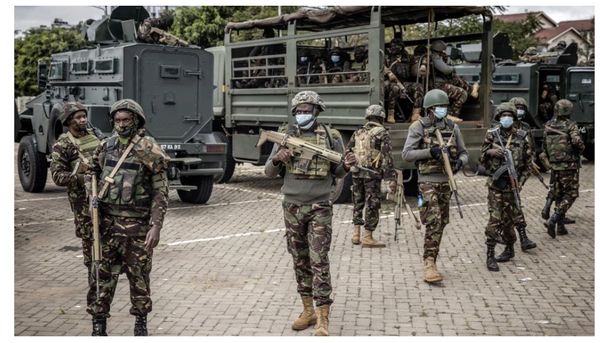
The role of Kenya Defence Forces (KDF) in delivering civilian infrastructure projects has been a growing debate in Kenya with the Senate being the latest to form the debate. The issue raised by the lawmakers is whether the dependence of the government on the military in carrying out large construction and renovation projects compromises the transparency, competition and participation of the local contractors in the economy.
The matter was noticed when Marsabit Senator Mohammed Chute requested official position of Senate Standing Committee on Roads, Transportation and Housing on the rising pattern of giving KDF construction contracts normally given to civilian companies. According to Chute, the military is associated with efficiency and discipline, but the fact that it is also engaged in the non-military activities like building and renovating several stadiums, begs the question of the procurement strategies and accountability.
Chute had requested the committee to explain the procurement modalities adopted in projects of government infrastructure since 2020 where KDF was the selected project implementation entity. He also required some reasons why the government had circumvented the open tendering process. In his view, the Senate should make sure that all the shillings used in the development projects are duly processed and benefiting Kenyan taxpayers openly.
Vihiga Senator Godfrey Osotsi shared the same sentiments as Chute because the involvement of heavy military involvement would be a blow to accountability in the expenditure of the public. He doubted the consistency in the application of the Public Finance Management Act and the Public Procurement and Asset Disposal Act on the contracting of the KDF to undertake projects. Osotsi argued that the military is said to be the most disciplined force, though the military does not have to be the only system that is disciplined, the ability to be efficient can be realized in the civilian systems through the right management and supervision. He stressed that Kenyans must get value out of money and warned people against taking the easy way out by employing the military in the name of efficiency.
But these reservations were not shared by all the senators. Narok Senator Ledama Olekina justified the roles of KDF by saying that its involvement in civilian activities is quite legal. He reminded the House that a firm called Ulinzi Construction Company, which is an entity of the Kenya Defence Forces, was instituted to legally execute such projects in 2021. Olekina also mentioned that the Critical Infrastructure Bill, 2024, which is currently discussed in the National Assembly, gives a legal basis to military participation in critical projects of the country. He should not be influenced by the interests of the private companies, he added, and the work of the KDF has frequently been done punctually and to a high standard.
Senate majority leader, Aaron Cheruiyot, echoed the views of Olekina and stated that procurement laws enabled government organisations to deal directly with each other in emergencies or in strategic circumstances. He pointed out that these contracts are not money-driven and could help improve efficiency in delivery of the services to the populace. By making a comparison with the world trends, Cheruiyot observed that most Chinese state-owned enterprises are able to deliver significant projects both locally and internationally. He argued that Kenya could develop its own robust state-owned business which could compete with others in the world and the engagements of KDF could make the country have a robust national capacity and not a weakening of the businesses.
Some of the senators, however, still expressed reservations. Nominated Senator Karen Nyamu demanded openness in the framework in which construction work in KDF is directed. She sought clarification as to whether these projects are implemented either by an order of the President, a special agreement, or by the means of a competitive tendering. Nyamu cautioned that military leadership in the construction industry may deny the civil contractors business opportunities and slack job creation in the general economy. Respecting KDF, she urged the government to leave them to their core business of national defense, and consider contracting civilian contractors who have proven to be experienced and reliable over the years.
Nominated Senator Beatrice Ogolla, in her turn, took a more compromise position. She explained that there is nothing wrong with letting the KDF have an input in the national development provided the engagements are legal and ethical. Because KDF officers already receive the public payroll, it is reasonable that they should be able to help in the projects benefiting the citizens, she argued, though within the confines of the law.
The senate debate is a broader national debate on the need to balance between efficiency and accountability in the delivery of the services to the people. With the government still giving KDF high profile infrastructure projects like stadiums, roads, and government buildings, there are doubts on the long term consequences of governance, transparency and the private construction industry. The question of whether the role of military increases or reduces the level of public confidence or undermines the competitive level is one of the key questions that make Kenya to be a country with a new strategy of national development.