
EACC Moves to Retrieve Government Land Valued at Sh250 Million in Kahawa Sukari
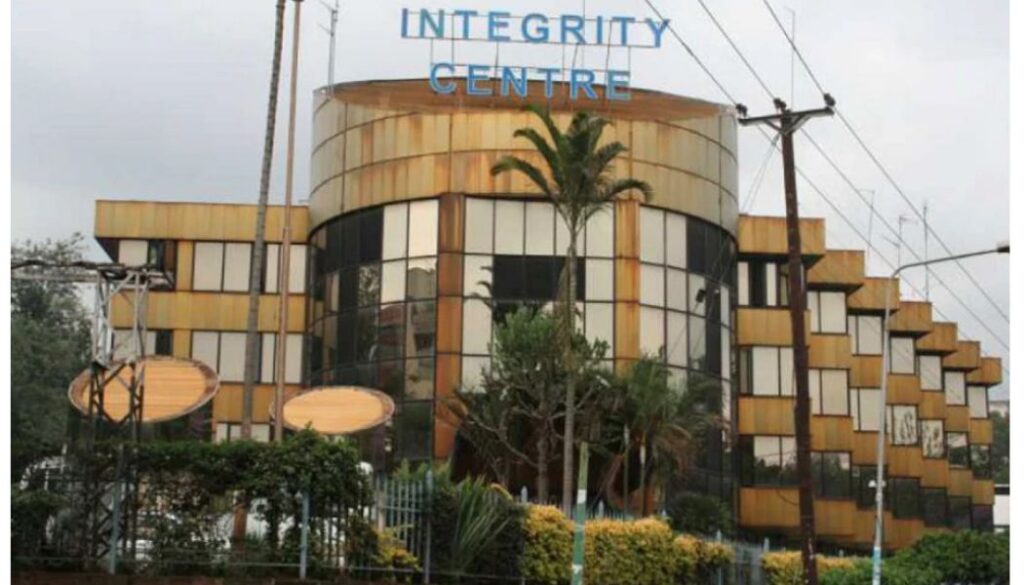
The Ethics and Anti-Corruption Commission (EACC) has taken a suit to reclaim a nine-acre piece of government land in Kahawa Sukari, Ruiru, that was allegedly stolen and irregularly transformed into a residential house.
According to the commission, the land, which was worth Sh250 million in 2019, was initially designated to be used in the building of a secondary school, but was illegally sold and subdivided to be used as residential buildings.
In court records submitted at the Thika Environment and Lands Court, the disputed piece of land, which is under registration as Ruiru/Kiu Block 3/1372, is estimated to be 3.977 hectares (nine acres).
It was originally included in Land Reference No. 10901/20 owned by and developed by Kahawa Sukari Limited as part of the greater Kahawa Sukari Residential Scheme.
According to the EACC, when the housing project was being approved, the government requested, via the Commissioner of Lands, that the developer to set aside some of the parcels to be used by the citizens, such as land to be used as schools, roads, and other amenities of the community.
One of the plots that was assigned to the public utility was the nine-acre block in which a secondary school would be situated. The school development was accepted with the provision that it should be constructed within a period of 24 months after the lease was issued.
The developer, however, did not fulfill this requirement.
Instead, Kahawa Sukari Limited disposed of the land to private persons in 2005, James Mwangi Wagura and Lucy Waruguru Wagura in what the EACC termed a blatant violation of the lease terms.
The commission claims that the sale did not take place as the lease was categorical that, should the land not be developed in its intended use, or in case it uses it in another way, ownership would automatically go back to the government.
The next sale, thus, made the sale subsequent to it null and void. As per the court records, in the year 2015, Mwangi and Waruguru, who have now become the new owners, requested the County Government of Kiambu to amend the use of the land, which was currently used as educational purposes, to residential.
The then Director of Physical Planning gave the nod to the application, a decision that the EACC claims was inconsistent and unconstitutional. With the approval, the land was divided into 37 smaller residential parcels, which are registered as Ruiru/Kiu Block 3/3704 to 3729, and new lease certificates were issued in the name of the two owners.
EACC argues that the change of use and subdivision was a fraud, and a presumption of the public nature of the property was being flouted.
The commission still says that the nine-acre parcel is state land that serves as an educational facility, and any form of private ownership is unlawful.
The EACC, in its petition, claims that the land was irregularly alienated, handed over, and subdivided, and therefore needs to be recovered on the basis of being against the interest of the people.
It is also requesting the court to cancel and nullify all titles that have been issued after the subdivision, and accordingly restore the title of the whole parcel in the government.
EACC has at the same time, obtained temporary orders to maintain the property.
The case was heard and decided when Lady Justice Jane Onyango of the Thika Environment and Lands Court last week applied an injunction against the defendants: Kahawa Sukari Limited, James Mwangi Wagura, and Lucy Waruguru Wagura so that they could not sell, transfer, mortgage, or otherwise interfere with the land until the case is heard and decided.
The commission pointed out that the case was a continuation of its campaign to repossess seized communal land in the country, especially lands that were originally allocated to community facilities like schools, hospitals, and recreational grounds.
According to the EACC, this land is central to community development, and the illegal transfer of this land into private possession weakens the planning structure in the country and denies the citizens the much-needed public services.
When successful, the recovery will ensure that the land is returned to its initial purpose of serving the populace, which may be the construction of the long-awaited secondary school that was planned in the Kahawa Sukari development plan.