No Boarding Fee Hike, Education Cabinet Secretary Says Amid Senior School Claims
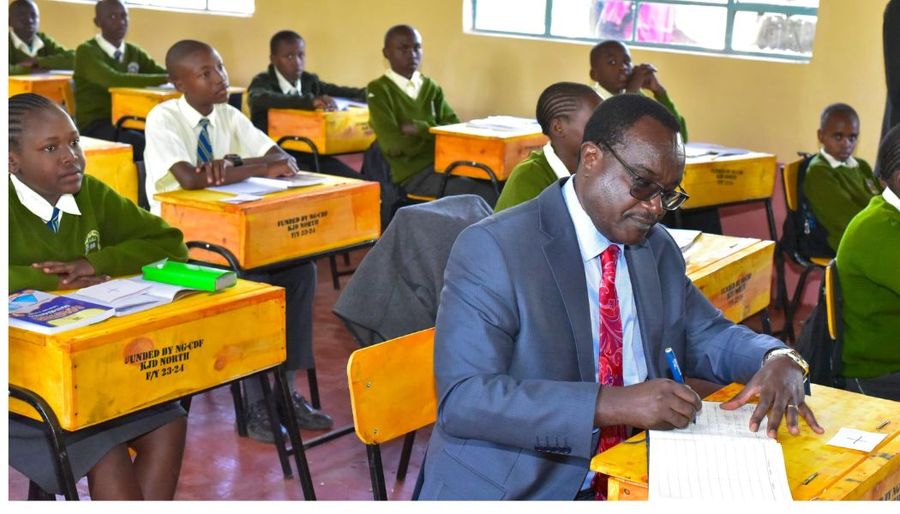
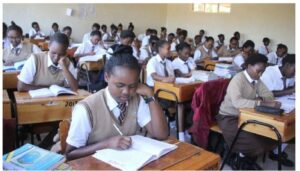
Education Cabinet Secretary Julius Migos Ogamba has strongly refuted reports that portray the government as having raised boarding fees in public senior schools.
Ogamba, in a statement on Thursday, November 6, made it clear that no reassessment of the present fee structure had been done, and parents and the public were advised to ignore the false information in the media.
The CS said that they have been drawn to reports in the media sections to the effect that boarding fees that are paid by learners in government senior schools have been increased.
Parents, learners, and the general population are duly informed that the boarding charges or any other charges, which could be paid by the learners, have not been revised.
Ogamba confirmed that the recent directives by the Ministry of Education regarding boarding fees are still in existence and that the government is keen on having affordable education by still providing funding in the form of capitation.
His statement continued to state that the current instructions of the Ministry of Education on how much should be paid as boarding fees would still prevail, as it has been the case.
The government will still play the constitutional role of giving a capitation to the learners in the senior school.
The rate that has been accepted to this level of education is KSh22,244 per learner per year.
These comments by the CS occur against a background of increased scrutiny of education funding and continued checking of school enrolment data, which has influenced the flow of capitation funds over the past few months.
Another issue that was raised by Ogamba was the current process of verification of school capitation funds by the ministry, which was triggered by the results of the Auditor General.
The audit had sounded an alarm on the presence of ghost schools and exaggerated enrolment statistics, which were contributing to anomalous payment of state revenues.
The verification exercise that we were going through was due to the Auditor General’s concerns.
We thought it necessary to take an inventory and to determine why there were cases of ghost schools and ghost students being reported, said Ogamba.
The CS said that the ministry took a progressive mode of giving out funds where they released funds to institutions immediately after their records were confirmed.
Each period or each day that we concluded the verification exercise, he said, we gave money to such schools.
But according to Ogamba, at the end of the process, 990 schools out of the total of 570 primary and 420 secondary schools had not handed in their enrolment data.
In spite of the uncompleted information, the ministry decided to distribute part of the funds so that the actual learners would not be hit.
Ogamba added that they made the decision taking into consideration the Term 2 numbers to pay out half of the capitation since they need to physically discover the existence of these schools.
Results of Examination Timeline. The demystification of boarding fees is only a week after Ogamba released the timeline in the national examination results will be released.
In an interview on October 29, the CS affirmed the release of the results of the Kenya Primary School Education Assessment (KPSEA) and the Kenya Junior School Education Assessment (KJSEA) before the year ended. He also mentioned that the Kenya Certificate of Secondary Education (KCSE) will be published in January 2026.
The Education Ministry is in the midst of a very crucial phase of examination and verification of funds as it tries to maintain transparency and build the trust that the people have in the education system.
Ogamba promises to silence a mounting public anxiety concerning the possibility of increased costs and delayed funding, especially in the run-up to a new school year by parents.
The CS emphasized that the government is still committed to providing quality education to all Kenyan learners by ensuring that they have equitable access to good education through continuous financial support, control, and accountability.