Phantom Schools Busted: Ministry Shuts 10 Ghost Secondary Institutions
This action by the Ministry of Education has closed ten ghost schools, marked thousands more currently in operation that have very small numbers of students, and whose educational systems are vulnerable to inefficiency and misuse of public funds, have been identified on a nationwide audit.
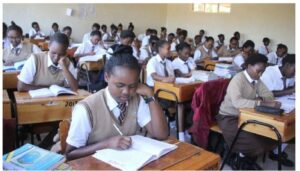
The report of the ministry indicates that the number of schools with less than 100 students is more than 6,000 in the country and 10 secondary schools were discovered to have no students at all despite teachers being assigned to them and even financial aid.
The finding has caused a mass data checking exercise and the suspension of school capitation funds in anticipation of a check on the correct enrolment figures.
Among the closed institutions are Kiria Secondary School in Nyandarua, Dr Machage Moheto in Migori, Ragia Forest High in Kiambu, Mugwandi Mixed in Kirinyaga, Friends Bulovi in Kakamega, Loiwat High in Baringo, Ngamba Secondary in Muranga, Sintakara Secondary in Narok, Maji Mazuri Mixed in Baringo, and Fr Leo Staples Girls in West Pokot.
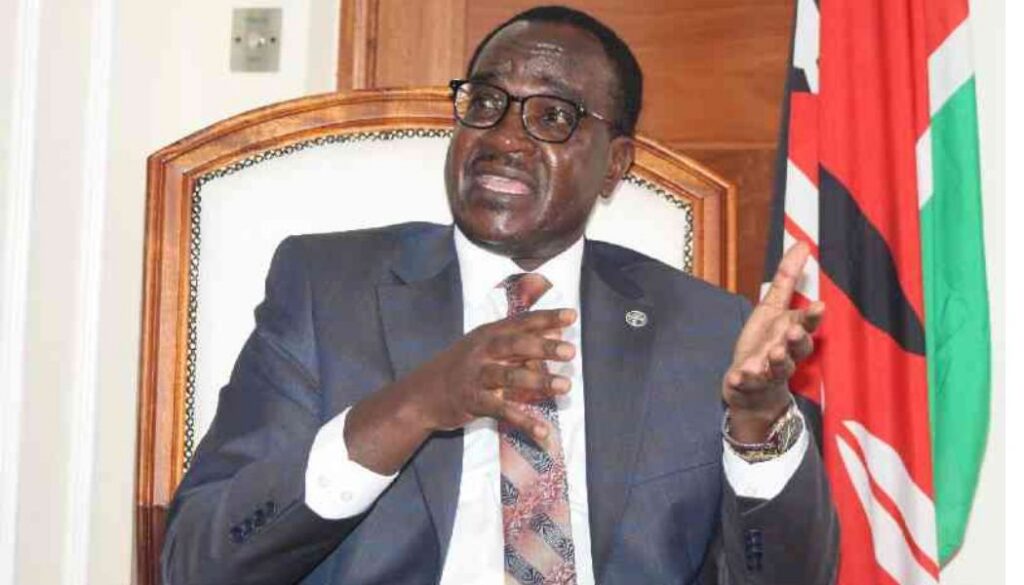
Cabinet Secretary in Education Julius Ogamba termed the revelations as shocking, indicating that the government might have pumped funds into ghost students and nonexistent schools.
He revealed that of the 6,000 under-enrolled schools, 2,145 of the public primary schools are below 45 in number, and 3,979 schools of junior secondary below 90.
These were schools with no students or teachers. We are currently inquiring about whether money has already been paid to them in the past, and whether or not it was defrauded.
Any form of financial impropriety shall be reported to the appropriate investigation agencies to be criminally prosecuted.
Findings of the audit also resonate with previous alerts raised by the office of the Auditor General, which had issued a warning that certain institutions that are receiving government capitation are not there or have no ability to demonstrate that they have students who have been enrolled in their institutions.
The ministry has responded by halting funding to schools whose data cannot be verified, which has seen it suspend the release of Sh1.2 billion until such time is done. Early results indicate that there are high disparities in the data of learners at all levels of education.
In primary schools, 23, 889 schools were found to have 5, 833,175 learners. But upon checking, 16,788 schools were hooked to be fully capitated.
Out of the 37,324 schools, another 3,065 schools did not submit their data, or gave dubious enrolment data and thus the ministry released half of their allocations pending verification. The ministry started by registering 2.43 million learners in junior secondary schools, but subsequently confirmed 2.94 million students in 20 630 schools that were to receive full funding.
The 934 schools that lacked data or had wrong data were withheld on the capitation. In the case of the secondary schools, the ministry had an amount of Sh10.37 billion, which was allocated to 3.35 million students in 9,550 institutions.
After checking, 3.2 million students in 9,540 schools were found to be eligible, and Sh10.09 billion was released.
The other ten schools that had zero students were closed permanently as the so-called ghost schools. CS Ogamba insisted that the ministry is set to straighten its books to bring accountability and transparency in the management of the public education funds.
He stated that they were eager to make sure that the resources invested in education are efficient and used in the manner in which they are intended to.
Funding decisions should be based on verifiable and accurate data, lest resources are wasted and abused. In the third term, the ministry paid Sh16.5 billion all round, and this included Sh10 billion on Free Day Secondary Education, 5.1 billion on Free Day Junior Secondary, and Sh1.7 billion on Free Primary Education.
Nevertheless, Sh1 billion is still pending in the distribution process as the enrolment verification is still pending.
As explained by Ogamba, the process of audit and verification was launched due to the inconsistencies in the number of registered schools and those learners who are getting the state funding, which were identified in the process by the auditors.
Certain schools were reportedly being open on paper, and this allowed loopholes to allow embezzlement.
According to Ogamba, cases of untraceable schools receiving capitation had been reported by the Office of the Auditor General.
This provoked us to institute a thorough verification exercise in order to determine the actual number of institutions and learners.
The money will now just be disbursed to schools that have been verified to be enrolled.
He also gave an implication that the ministry might contemplate the consolidation of schools with fewer enrolments or reassigning teachers to those schools with higher population so as to achieve better efficiency and utilization of resources.
The ministry audit has been a welcome change by education stakeholders who had long been due to be taken in order to bring a sense of integrity and transparency in the funds allocation process.
Analysts believe that the crackdown would save billions of shillings that would otherwise be lost due to ghost enrolments and mismanagement. The Ministry of Education as the verification exercise unfolds further holds the view that its overall objective is to see to it that the entire shilling of the state funds is channeled to the actual functioning institutions to support real learners as it strengthens accountability in the entire education system of Kenya.