
Why High-Quality Childcare is Essential for a Thriving Society
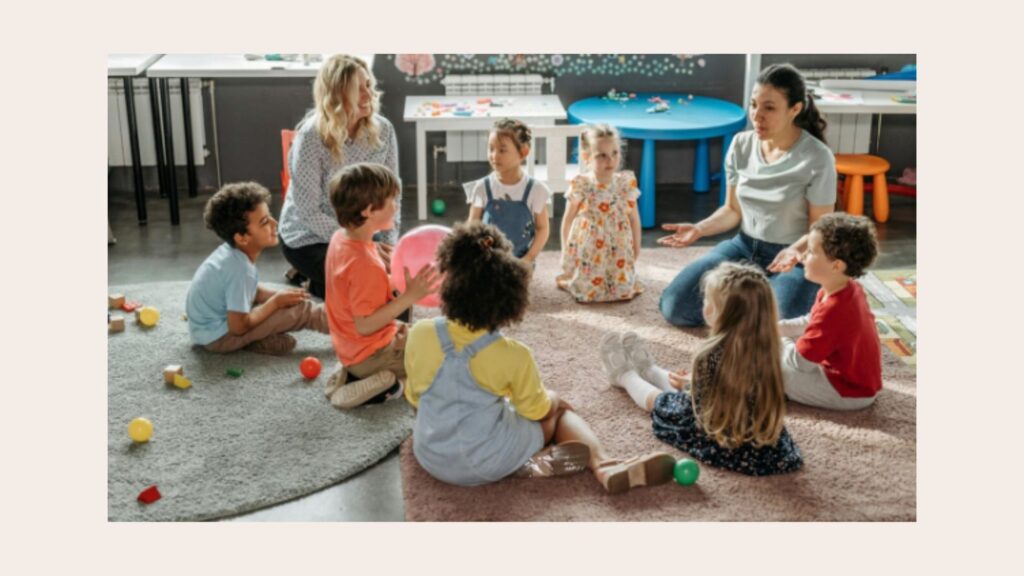
High-Quality Childcare is Essential for a Thriving Society
The future of our society rests on the well-being of future generations. In brief, the initial years of life, which are crucial and construct lifelong cognitive, social, and emotional skills, deserve our sincere consideration. However, child-raising is a complex process in our world, and in such a scenario, many families are looking into childcare options. In this article, I substantiate that child care of high quality is not just a luxury for working parents; it is a long-term investment in our country’s future. It will involve decision-makers, legislators, community leaders, and parents to create a more significant consciousness about the pertinence of the issue. The aim of the article is to convince the stakeholders that giving quality childcare services the priority is not just reasonable; it is a necessity. I will examine the issue from an economic point of view, a psychological side (emotional connection to nurturing young minds), and the ethical aspect of providing equitable opportunities.
I will use an approach that can be supported by all policymakers who make decisions on childcare investments and parents looking for the right choices for their kids. Using reason, emotion, and ethics, we will campaign for a future where high-quality childcare will not be a privilege but a right for all children of whatever socioeconomic background. Expanding access to these programs creates a highly skilled workforce, removes social gaps, and, in the very final point, leads to a better, prosperous nation (OECD). This investment does not only have to do with the future; it means to provide the kids with the chance to succeed today.
Logos: The Economic Benefits of High-Quality Childcare
The economic justification for emphasizing quality daycare is much more than simply allowing parents to continue working beyond the financial component. There are many other factors that contribute to this argument. It is particularly amazing as the long-term benefits will not only be for children but also for society in general. This is one of the aspects that makes this element particularly exceptional.
Building a Strong Cognitive Foundation
From infancy to preschool, this period is crucial for a child’s brain development. Top-rated childcare programs are developed to assist children with cognitive development through stimulating activities, providing caregivers who can appropriately interact with the children, and focusing on core cognitive skills. The research by Melhuish et al. gives a clear, compelling indication. The performance of the students participating in these programs from an early age was better than that of their friends whose parents did not send them to programs when they were young, according to various standardized test scores (Melhuish et al.). Those advantages do not belong to just one subject; they incorporate language skills, math skills, and other top-priority mastery areas. This amounts to a solid educational basis; consequently, the students are likely to succeed in higher education and their future careers.
Investing in a More Skilled Workforce
The gains in the individual cognitive development are not confined to a single person. Comparatively, more children who are exposed to early childhood education of good quality complete high school successfully and pursue further education degrees. A Georgetown Center on Education and the Workforce research reported that students’ chances of college graduation in their 20s increased by 40% with enrollment into a good preschool program (Carnevale et al.). This leads to a chain of effects as a better and better-skilled workforce is created with time. Visualize a world where an increase in the capability of individuals to grasp and master the necessary core competencies in science, technology, engineering and other essential areas prevails. Besides that, it not only makes a difference for people by increasing their capacity to earn but also works in favor of our economy on a global scale.
Increased Productivity and Reduced Societal Costs
Providing good quality childcare is not only about predisposing the next generation to certain professions; it is about preparing them to be useful not only for a career but also for the community. According to Abdul Rauf and Abu Bakar, children who spend their time in well-organized preschools tend to be sharper, have better self-control and are better at social interaction. As a result, workers have a stronger connection to their workplace and are more productive. Decreased absenteeism, problem-solving, and team skills are pivotal for a responsive and productive work environment.
Also, these programs will lead to a reduction in dependence on social programs in the future. The programs creating a safe and healthy environment can help to reduce cases of child neglect and abuse. As a result, they can slow down the child welfare burden (CDC). Furthermore, kids with powerful interpersonal skills and appropriate emotional management are less likely to become involved in illegal activity when they grow up, which helps to relieve the pressure on the justice system. This cost-saving advantage only makes the economic case for childcare reform even more solid.
The Multiplier Effect
Positively, the value of quality childcare goes beyond the direct costs of the programs, including immediate expenses. Thus, when more parents, especially mothers, get to pursue full-time employment opportunities, childcare boosts multiple effects. Growth in household incomes, in turn, increases consumer spending, which stimulates economic growth. On the other side, mothers with a higher level of education support community development through their contribution by encouraging more innovative ideas and social cohesion.
Pathos: Nurturing Young Minds—The Emotional Benefits of Quality Childcare
While the cost-effectiveness of high-quality childcare is hard to dispute, the level of influence this has over a child’s emotional development and social future can not be underestimated. Visualize a situation where a child enters into an excellent childcare program. They bump into kind, loving personalities, creating a pleasant, exciting environment. Thanks to the interactive activities, the songs, and the stories, these caregivers surpass just being superintendents, they end up being the guardians of exploration and the teachers of discovery.
Fostering Emotional Regulation
Within this nurturing environment, children develop a critical skill: emotional regulation. Take a preschooler, for instance, when they are troubled by a missing item. In a quality program, the caregivers do not ignore the occurrence of a tantrum. Hence, they are guided through age-specific processes to enable them to pinpoint their emotions, express them in a positive way and provide them with coping skills by themselves. This could involve teaching a relaxation technique like deep breathing or encouraging them with words of empathy and listening. They gradually learn to regulate their emotions, a skill that carries into the real world, with them being less distracted, fewer emotional outbursts, and a stronger resilience to life’s problems.
Nurturing Social Skills
Consequently, children with satisfactory early education can develop their social skills, which help them to communicate effectively with other people. Through engaging in activities like play and group projects, kids develop vital social skills such as cooperation, communication, and conflict resolution (Parker). Think about a bunch of kids who are stacking the blocks together. They stipulate their functions, support each other, and are forced to deal with conflict resolution. These seemingly little bonded relations educate the youngsters about complex skills like empathy, sharing, and taking turns. These skills serve as building blocks for regular social interactions, thus, children can make lasting friends, resolve conflicts and become good-quality people.
Fostering Self-Appreciation and Confidence
The farthest reaching change brought about by quality child care is the development of a sense of appreciation and trust in one’s self. In support of these programs, the kids are welcome to discover their interests, learn about the unknown, and rejoice with their accomplishments. The caregivers use positive reinforcement, which ultimately leads to a competent and self-believing consumer. Picture a child having their first experience with a certain skill – tying shoelaces. At that moment, they feel euphoria and pride, which will make them courageous enough to welcome further challenges, knowing that they will succeed as long as they keep trying (Parker). Through these early experiences, the seeds of a healthy self-image grow, a central core of emotional resilience and the key to future success.
Community-wide Impact
The benefits are not limited to the child alone. The impacts affect the whole community in the long term. It is scientifically confirmed that children who, in the early period of their lives, have experienced positive development in social and emotional terms are less prone to become aggressive or to become the perpetrators of bullying. Visualize a school atmosphere in which kids have mastered the skill of managing themselves, interacting with classmates, and working in groups for projects. This draws everyone into the classroom regardless of socioeconomic background or student success track record.
Ethos: Equality of Opportunity and a Moral Imperative
The present situation regarding children’s care and vigilance shows a wide gap in accessibility and quality. The impact of social stratification is evident across all economic brackets, as low-income families find it difficult to afford excellent childcare programs, putting their children behind the curve before they even begin their educational journey. It’s not only that this disparity perpetuates the existing social misbalance but also that it hampers the realization of the potential of our gifted part of society.
Consider the stark reality many low-income families face: the lack of a chance for quality childcare, which offers a brain-developing experience. While wealthy families are spontaneously eligible for renowned early childhood programs, the deprived ones are usually in complex decision-making positions and have to do with low standards and sometimes none. Thus, disadvantaged children are plunged headlong into an unequal playing field; they lack the early social support necessary to succeed academically, socially and emotionally.
The well-known and recently published 2021 report of the Center for American Progress captures the crisis of this inequality and its consequences (Trisi). The article shows that kids from low-income areas with access to quality early-childhood programs are likely to complete high school and college at a higher rate than children from the same neighborhoods and who could never reach the same level of education (Trisi). The statistics paint a stark picture: high-quality childcare provides an effective instrument for breaking the circle of ancestral poverty as it brings out the hidden power in children to become who they are and seize all the opportunities available.
Nevertheless, it is not economic grounds solely that drive the critical issue of early childhood care access everywhere. On the very basis, it represents a fundamental principle of a level playing field and equal opportunities for all, which are the hallmarks of a democratic society and are crucial for its justice and fairness. It is children’s righteousness that, irrespective of their background, they all deserve an equal opportunity to thrive and win. Discouraging children from high-quality early development programs continues systemic injustices, and the cause is worse; it is a moral violation and even a grave betrayal of the continual duty of mankind to bring out the best in everyone, regardless of their social or financial conditions.
Imagine a nation in which children from all socioeconomic backgrounds, from the wealthiest to the lowest, have access to early learning education that is both equitable and consistent, and that lays the groundwork for the years to come. The society that we envision is not only a utopian ideal; rather, it is a reality that we can work toward. This is an activity that involves the participation and collaborative action of all individuals, including governments, stakeholders, and communities alike..