A Decade Later: Former British Soldier Held Over Killing of Kenyan Woman Agnes Wanjiru
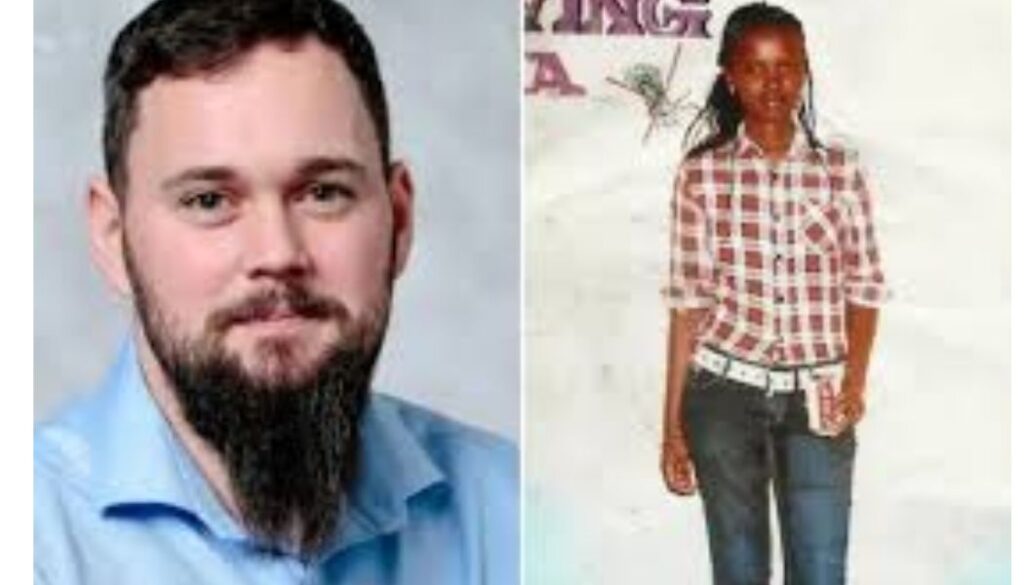
Robert James Purkiss, a former British soldier, has been arrested in the United Kingdom in relation to the 2012 murder of Agnes Wanjiru, a 21-year-old Kenyan woman whose murder has elicited a decade-long international outcry of injustice.
On Saturday, November 8, the Office of the Director of Public Prosecutions (ODPP), Kenya, announced that Purkiss will be presented in a London court on November 14, 2025, during a bail hearing concerning the extradition request of Kenya.
The next step in the extradition process is to be decided in a case management session that is scheduled on December 9, 2025.
This arrest occurred after a long process of coordination between the Kenyan and British officials, and this is a significant milestone in the longstanding case that has not been solved over the last 10 years.
The ODPP said that the development occurs six weeks after Director of Public Prosecutions (DPP) Renson Ingonga officially began extradition proceedings.
On September 16, 2025, DPP was able to secure an arrest warrant for Purkiss in a court in Nairobi. On October 9, 2025, three weeks later, ODPP confirmed that all the required extradition documents were duly completed and forwarded to the Office of the Attorney General to send them to the UK authorities.
These records became the precursors to the eventual arrest of Purkiss and the initiation of extradition in London.
The Murder of Agnes Wanjiru Agnes Wanjiru, a 21-year-old mother and hairdresser, was last seen at the Lions Court Lodge in Nanyuki, a town in which the British Army Training Unit Kenya (BATUK) is located, on March 31, 2012.
Two months later, on June 5, 2012, her body was found in a septic tank behind the same lodge.
The discovery caused a nationwide uproar in Kenya and demanded responsibility on the part of both the Kenyan and British leaders. This was especially sad considering that Wanjiru had left her five-month-old daughter, Stacey, and had been working to make ends meet by hairdressing and some part-time sex.
She was later reported to have been seen out with British soldiers, who claimed to be of the Duke of Lancaster Regiment, on the night she disappeared. Although the case was being investigated early on, it died years later due to cover-ups and red tape, which frustrated her family and human rights activists.
The re-emerging international pressure (of the British press, civil society in Kenya) finally influenced the authorities to reopen the case, which eventually resulted in Purkiss becoming the primary suspect.
The Defendant and his Military History. In 2006, Purkiss joined the British Army as a medic with the Duke of Lancaster Regiment.
Throughout his ten-year service, he served at a number of large British stations, among them Catterick Garrison, North Yorkshire, Tidworth Barracks, Wiltshire, and Weeton Barracks, Blackpool.
He has also made several trips to Afghanistan and was sent to Kenya in 2012 as a member of a British Army Training Unit (BATUK) detachment, which was warming up in military exercises in the heat. It is at this deployment that the events that resulted in the murder of Wanjiru are purported to have taken place.
UK and Kenyan Authorities’ Reaction. In September, after the arrest warrant was issued, a spokesperson of the United Kingdom government offered his or her condolences to the family of Wanjiru and reiterated that the United Kingdom would see to it that accountability is achieved.
The spokesperson said that they are still thinking over the family of Agnes Wanjiru, and will of course, be fully devoted to assisting the family to obtain justice. We know that the Kenyan Director of Public Prosecutions has found that a British citizen must undergo trial over the murder of Ms. Wanjiru in 2012. A Step Toward Justice.
The fact that Robert Purkiss has been arrested is considered to be a breakthrough in one of the most high-profile unsolved murder cases of a foreigner in Kenya.
This is the first suspect involved in the incident since the murder of Wanjiru. By being extradited, Purkiss will be tried in Kenya, and it is hoped that the prosecutors will be allowed to use years of evidence to convict the man, such as eyewitnesses and forensic reports.
The arrest brings a sense of hope to the family of Wanjiru, who have waited more than 13 years to finally see justice done in her case, and the fact that someone will ultimately hear the truth about her death, and that justice will eventually be served.